
How can we help you?
At Summit Dental Group we are always available to answer your questions. We want our patients to be fully informed about important dental procedures and oral health issues, so we’ve listed several of the questions we hear most often. If you do not see the answer you’re looking for below, please do not hesitate to contact our office at (970) 468-2471.
Cleanings & Dental Hygiene
 Many groups have expressed concern in the past several years over the use of amalgam fillings (also called silver fillings). Dental amalgams contain low levels of mercury, and this has led many people to believe that these fillings are linked to a number of conditions including Alzheimer’s, autism, and multiple sclerosis.
Public Health Agencies on Amalgam Fillings
A number of public health agencies like The American Dental Association (ADA) and the FDA have confirmed the safety of dental amalgams and stated that there is no scientific basis for the link between mercury-based fillings and these or other conditions. The fact is that there is no known cause for these conditions and no evidence to support the claim that removal of amalgam fillings can cure these or any other condition.
Safety
The mercury in dental amalgam is mixed with other metals like silver, copper, tin and zinc to create a stable alloy that has been safely used by dentists for over 100 years to fill cavities and preserve the decayed teeth of millions of patients. The FDA reconfirmed the safety of dental amalgams in March of 2002, and in 2006, the National Institutes of Health concluded several large-scale studies that further supported the earlier findings of the FDA.
Additionally, the concern over adverse health effects resulting from the very small amount of mercury vapor released from amalgam fillings has been found by the ADA to have no scientific basis. In fact, consuming seafood is likely to expose you to more mercury than the vapor that is released from amalgam fillings.
 The type of treatment we choose to alleviate teeth grinding (bruxism, or bruxing) depends on its cause. In most cases, teeth grinding, or bruxism, occurs while you are sleeping. This constant force can cause deterioration of your teeth and dental work. It can also cause problems with your jaw joints (TMJ).
Causes of Teeth Grinding
There are many different reasons for teeth grinding, but the treatment most commonly used at Summit Dental Group to prevent damage to your teeth and the development of TMJ problems is a custom-made night guard that is worn during sleep.
Bruxism is often thought to be related to stress, but grinding of your teeth may also be a result of a misaligned dental bite. Since there are so many reasons why people grind their teeth, a thorough dental exam is needed to make sure we choose the correct treatment.
Teeth grinding is an issue that needs to be addressed promptly in order to reduce the risk of developing more serious dental problems. If you have questions about treatment for your teeth grinding, please contact our Dillon dental office and we will be happy to arrange an appointment to help relieve your symptoms and get you the help you need.
 Our Recommendation
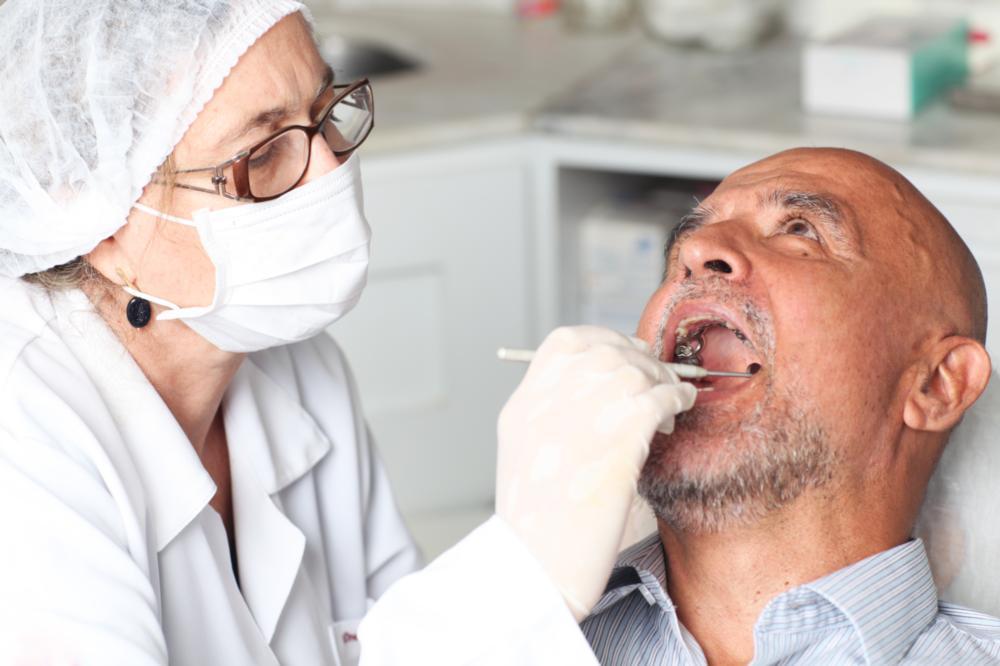
The hygienists at our Dillon dental office recommend that your personal oral hygiene routine include brushing and flossing twice a day. In addition, we recommend twice-yearly cleanings with to monitor the health of your teeth and gums.
You may feel that your teeth are being properly cared for with regular brushing and flossing at home, but only a dental hygienist can make sure that your teeth are health and that you are not developing any problems that you can’t yet see or feel.
What If I Have a History of Gum Disease?
For patients with a history of periodontal (gum) disease, we recommend three to four cleanings per year to reduce the likelihood of further infection. Patients with chronic conditions like diabetes or heart disease also need to have more frequent cleanings. Your dentist and dental hygienist will recommend a schedule of cleanings based on your specific needs.
It is very important to make regular visits to our Dillon dental office to make sure that your oral health is properly protected. In spite of a regular routine of personal oral hygiene, you may still have problems developing that you are not aware of.
Please contact our office to arrange for a professional cleaning where you can talk to our hygienist about any changes you need to make to your at-home oral hygiene routine.
 Radiation Exposure
We are constantly exposed to radiation from a number of sources. These include the sun, minerals contained in soil, home appliances and dental x-rays. All of these sources can potentially damage our body's tissues and cells. In certain instances, radiation exposure can lead to the development of cancer. Fortunately, when dental x-rays are taken, you are only exposed to very small doses of radiation.
Advances in Technology
Advances in dental technology have reduced the levels of radiation emitted by routine x-rays. Summit Dental Group has reduced the amount of radiation you are exposed to by using digital x-ray machines that focus only on the small area being x-rayed. Even though the potential for stray radiation with digital x-rays is almost non-existent, we provide all patients with lead-lined, full-body aprons that further protect the body. To ensure safety and accuracy, Federal law states that all x-ray machines must be checked every two years. Some state laws demand more frequent checks.
X-rays are one of the most effective diagnostic tools we have, allowing us to see inside your teeth and beneath your gums to catch problems in their earliest stages. We believe that the many benefits of x-rays considerably outweighs the very minimal risk that they pose.

Gum disease, or periodontal disease, is a chronic bacterial infection caused by the daily buildup of plaque on your teeth. When plaque isn't completely removed by brushing and flossing, it hardens into tartar. This tartar acts as a magnet for bacteria, continuously irritating your gum tissue and eventually destroying the bone that supports your teeth.
It typically progresses through two distinct stages:
- Gingivitis: The early, 100% reversible stage marked by red, swollen, or bleeding gums during brushing.
- Periodontitis: The advanced, chronic stage where the gums pull away from the teeth, forming infected pockets that break down the supporting bone and structural tissues, which is the leading cause of adult tooth loss.
Because gum disease is a silent condition that rarely causes pain until it is severe, watching for warning signs like persistent bad breath, receding gums, or bleeding is critical. Furthermore, clinical research links this chronic oral inflammation to systemic health risks like heart disease and diabetes. Regular professional dental cleanings at our Dillon office safely remove tartar and catch these symptoms early to keep your smile and body healthy. Schedule your visit today!
 If you experience discomfort when eating hot or cold foods, you may be experiencing the symptoms of sensitive teeth.
Tooth sensitivity can be the result of any one of a number of dental problems including:
- Decayed teeth (cavities)
- Cracks or fractures in teeth
- Loose or cracked fillings
- Periodontal (gum) disease
- Worn tooth enamel
- Exposed tooth roots
Once the underlying cause of tooth sensitivity is determined, it can usually be easily treated. It may be as simple as using a desensitizing toothpaste, but proper treatment for relief of symptoms can only be determined by your dentist. Talk to your Dillon dentist if you have any questions about proper oral hygiene or concerns about tooth sensitivity. Book a consultation online today!
If your teeth bleed when you brush, it may be a sign that you are not brushing and flossing thoroughly. It may also be an indication of the presence of gum disease. If you are experiencing bleeding gums, you should make an appointment at our Dillon dental office for a professional cleaning with a dental hygienist.
Even if you are very diligent with your at-home oral health routine, you may still develop periodontal disease. The reason for this is that tartar that builds up in the nooks and crannies of your teeth cannot be removed by brushing and flossing. A dental hygienist is trained to find this buildup and remove it during a regular professional cleaning.
Get More Information at Your Appointment
During your appointment, your teeth will be thoroughly cleaned and examined to see if gum disease is developing. The hygienist at our Dillon dental office will also be happy to show you the proper way to brush and floss to avoid bleeding gums and the onset of gum disease.
Please contact our office if you have any questions about proper oral hygiene practices or to set up an appointment for a cleaning. Our oral hygienist will be happy to spend the time with you to make sure that you are protecting your dental health with a good routine of oral hygiene